
| 일 | 월 | 화 | 수 | 목 | 금 | 토 |
|---|---|---|---|---|---|---|
| 1 | 2 | 3 | 4 | 5 | 6 | |
| 7 | 8 | 9 | 10 | 11 | 12 | 13 |
| 14 | 15 | 16 | 17 | 18 | 19 | 20 |
| 21 | 22 | 23 | 24 | 25 | 26 | 27 |
| 28 | 29 | 30 |
- image
- 파이썬
- Fultter
- Gemma
- Flutter
- 야호
- YOLO
- 리뷰
- 구글
- GenAI
- clone
- 인공지능
- llm
- 클론코딩
- coding
- 영화
- Type
- Ai
- container
- 논문리뷰
- 딥러닝
- docker
- FunctionGemma
- chatGPT
- DART
- lightly
- Python
- Kubernetes
- ultralytics
- 엔지니어
- Today
- Total
딥러닝 공부방입니다. 근데 이제 야매를 곁들인.
[Database] #1 SQL? 본문
SQL Tutorial - Full Database Course for Beginners - YouTube
모든 것이 데이터..
DBMS
- A special software program that helps users create and maintain a database
- create, read, update, delete
- user tell dbms to do those thing
Relational Database (SQL)
- Organize data into one ore more tables
- each table has columns and rows
- A unique key identifies each row
Non-Relational (no SQL / not just SQL)
- Organize data is anything but a traditional table
- Key-value stores
- Documents (JSON, BLOB, ..)
- Graphs
- Flexibel Tables
Relational Database Management Systems (RDBMS)
- mySQL, Oracle, postgreSQL, mariaDB
Non-Relational Database Management Systems (NRDBMS)
- mongoDB, dynamoDB, apache cassandra, firebase ...
Structured Query Language (SQL)
- Standardized language for interacting with RDBMS
primary key (unique id)
- should be unique in a table
foreign key
- stores ids of other tables
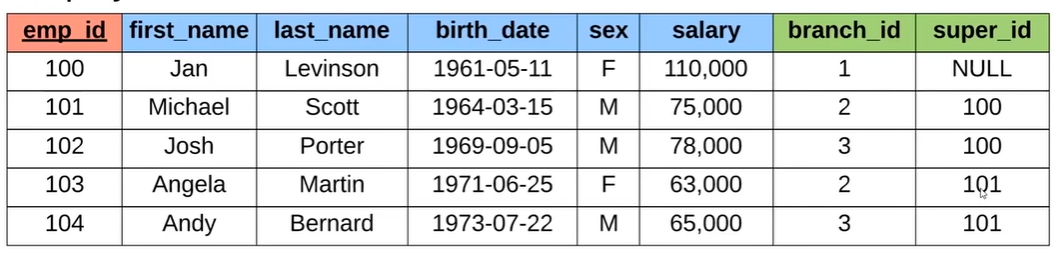
composite key
- need two attribute.
Structured Query language (SQL)
- is a language used for interacting with RDBMS
- implementations can be vary between systems
- can do 4 types of roles
- Data Query Language
- Data Definition Language
- Data Control Language
- Data Manipulation Language
Queries
- a set of instructions given to RDBMS
- Goal is to only get the data you need